When patients consider a smile makeover, one of the most common questions we hear is:
“Are veneers safer than crowns?”
The honest, clinically correct answer is not one or the other.
It depends entirely on the condition of your teeth.
Understanding this difference is essential, as choosing the wrong option can compromise tooth health, longevity and comfort.
What Are Veneers?
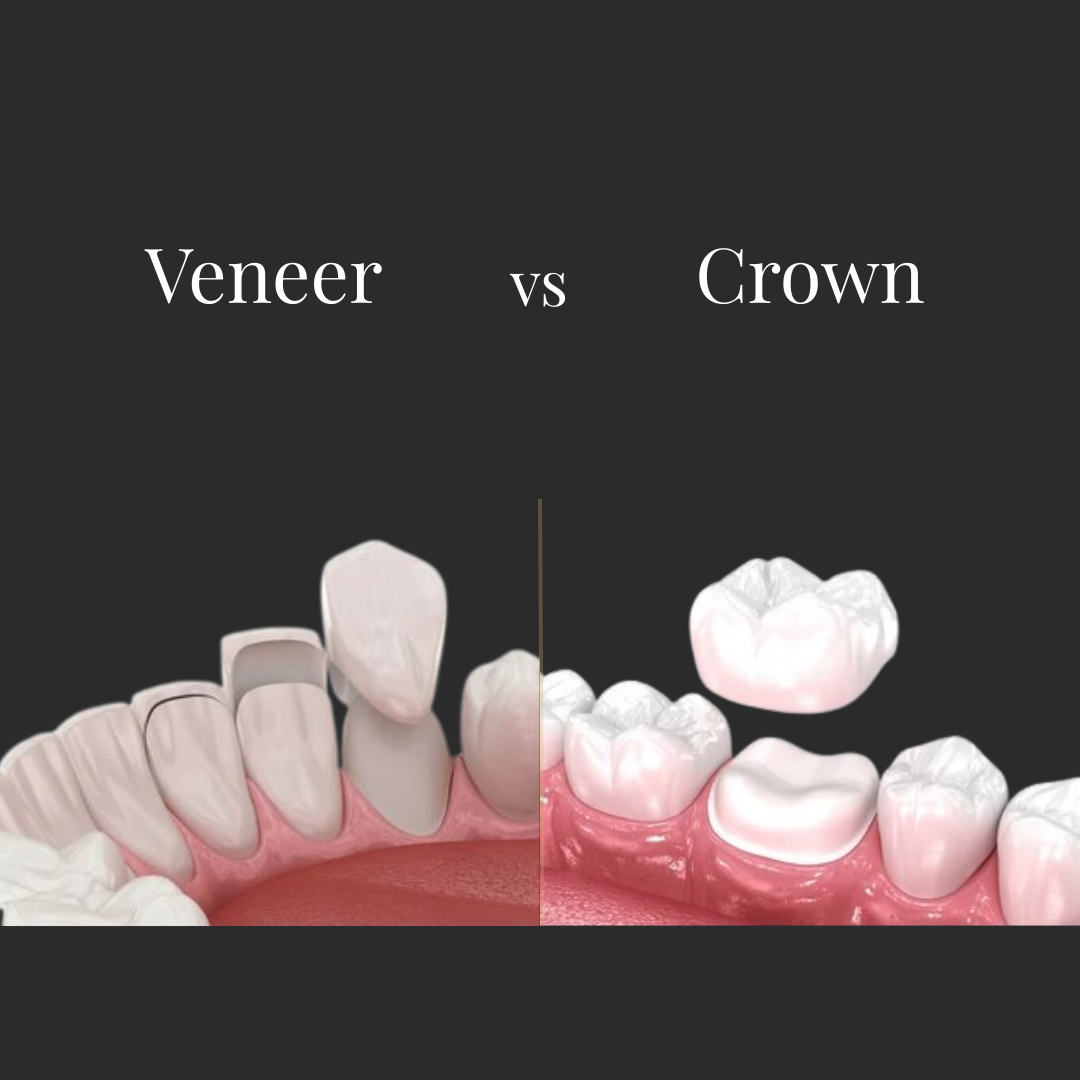
Veneers are thin restorations bonded to the front surface of teeth. They are commonly recommended for patients who want to improve aesthetics while preserving as much natural tooth structure as possible.
Veneers are typically used for:
- Mild to moderate discoloration
- Minor chipping or wear
- Gaps or shape correction
- Smile enhancement with minimal tooth reduction
When enamel is healthy and the bite is stable, veneers are considered one of the least invasive smile makeover options.
Veneers can be:
- Direct veneers – sculpted chairside using composite
- Indirect veneers – laboratory-made ceramic veneers offering higher precision and longevity
When planned correctly, veneers allow improvement in appearance without weakening the tooth.
What Are Crowns?
Crowns, unlike veneers, cover the entire tooth. They are not cosmetic upgrades by default—they are protective, structural restorations.
A crown becomes necessary when a tooth is:
- Severely broken or weakened
- Previously root-canal treated
- Heavily filled or cracked
- Structurally compromised beyond veneer support
In these situations, choosing veneers would be unsafe and short-lived. A crown provides the strength and coverage required to prevent further damage or fracture.
The Cuspid Dental Perspective
At Cuspid Dental, we don’t begin smile makeovers by asking,
“Veneers or crowns?”
We begin with diagnosis.
Safety, for us, means choosing a restoration that allows your tooth to function comfortably and last long-term—not just look good in photographs.
Before recommending any smile makeover option, we evaluate:
- Enamel thickness and tooth structure
- Existing restorations or cracks
- Bite alignment and functional load
- Long-term stability of the result
Using digital imaging, bite assessment and biomimetic principles, we aim to preserve as much natural tooth structure as possible while ensuring functional stability.
So, Which Option Is Safer?
From a biological and functional standpoint:
- Veneers are safer when the tooth is healthy, strong and structurally sound
- Crowns are safer when the tooth needs strength, protection and full coverage
There is no universally “better” option—only the right option for your teeth.
The Bottom Line
A beautiful smile should never come at the cost of tooth health.
The most successful smile makeovers are not driven by trends or quick fixes. They are built on careful diagnosis, conservative planning and long-term thinking.
A truly successful smile makeover begins with diagnosis—not design.
About the Author
Dr. Manisha is a dentist with a diagnosis-led, function-first approach to care.
Her work focuses on occlusion-driven dentistry, conservative smile design and long-term stability in complex dental cases. She believes that every smile makeover should protect tooth health first, with aesthetics as the natural outcome.